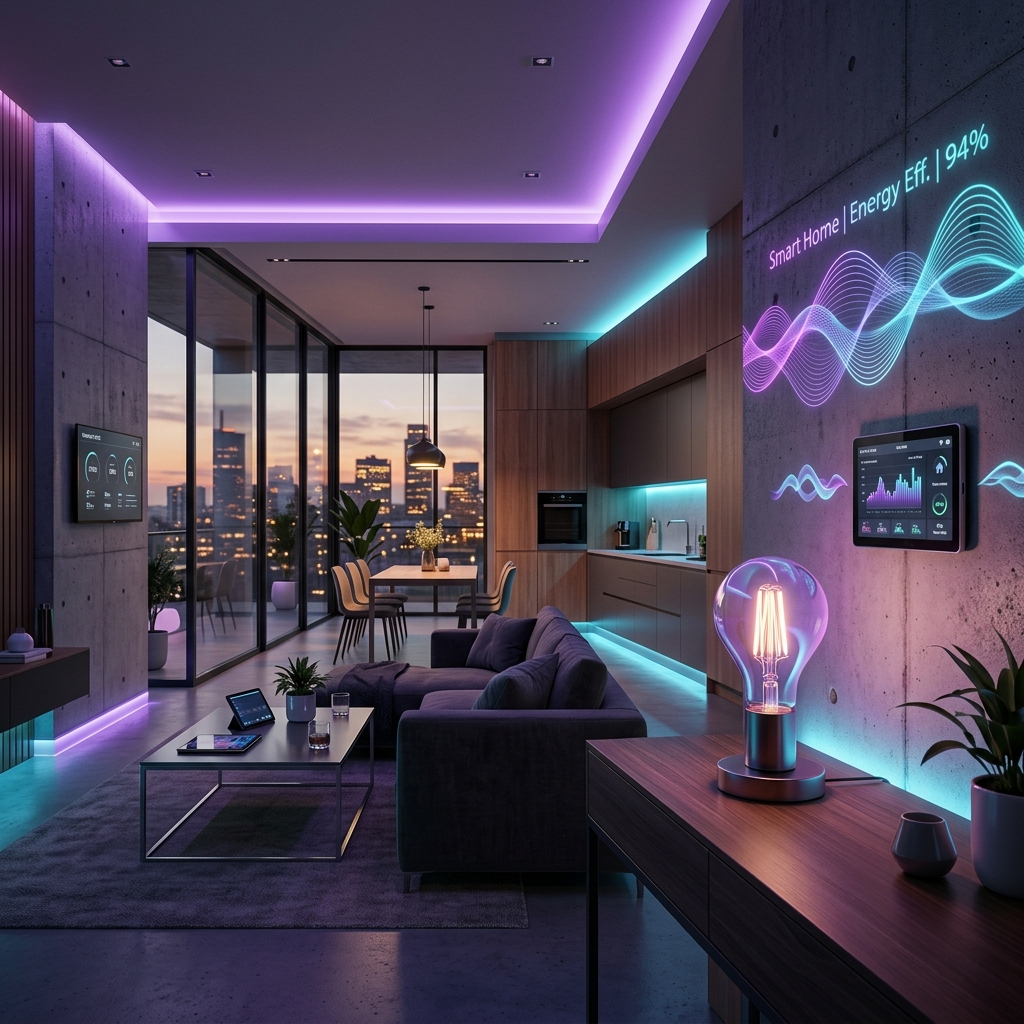
Every year, utility companies find new ways to squeeze our wallets, leaving homeowners searching for solutions. At the same time, we're bombarded with news about "AI smart homes" that sound less like practical helpers and more like expensive toys. Do you really need an AI-powered fridge that tells you you're out of milk? Probably not.
But when applied intelligently, local and cloud-based AI systems inside simple devices can save you hundreds of pounds a year on energy bills, while stripping away those small, annoying daily stresses. Here is how you can use curated AI automation to build a system that works for you, lowers your bills, and returns its investment in record time.
1. Slaying "Vampire Power" with Smart Monitoring
Did you know that "vampire draw" (appliances left on standby or plugged in when fully charged) accounts for up to 10% of an average household energy bill? Things like TVs, game consoles, microwave clocks, and laptop chargers silently consume energy 24/7.
This is where the Tapo P110 Smart Plug (1-pack) comes in. Rather than a simple mechanical timer, it utilizes onboard energy-monitoring telemetry. Combined with AI-driven routines, the plug learns when you're active and automatically cuts the power supply to heavy standby drainers when they aren't in use.
2. The Smart Hub Strategy: Orchestrate Your Savings
For an automated home to feel seamless rather than stressful, you need a local control centre. The Echo Dot (5th Gen) Charcoal and Echo Show 8 (3rd Gen, 2023) serve as excellent localized neural hubs for this.
With built-in temperature and motion sensors, these hubs don't just wait for you to speak. They use spatial awareness to run routines. If the Echo Dot senses a room is empty for more than 15 minutes, it communicates with your smart plugs to kill standby power and instructs your thermostat to drop by a couple of degrees. If the temperature drops below a set threshold, it can turn on a smart-plug connected space heater, running it only as long as necessary.
3. Adaptive Lighting: Efficiency Meets Well-being
We often think of smart bulbs as a mood-setting luxury, but lighting is a major source of minor daily friction and energy consumption. The Philips Hue White Smart Bulb (B22) paired with a Philips Hue Bridge with AI Scene Sync uses adaptive algorithms to match your lighting to your circadian rhythm.
By slowly shifting color temperature and brightness dynamically based on the sun's position, it naturally winds you down in the evening, promoting better sleep quality. In terms of efficiency, because LED smart bulbs consume a fraction of the power of traditional incandescent bulbs and are automatically dimmed when not needed, they slash lighting-related electricity costs by up to 80%.
4. Automating Cleaning Stress
Skeptics often lump robot vacuums in with overpriced gadgets, but time is money, and stress is a heavy tax on productivity. The Roborock S8 Robot Vacuum Cleaner moves beyond basic bumper-based vacuums of the past. It uses high-precision LiDAR mapping and AI-based 3D obstacle avoidance to map your home and navigate intelligently around cables, pet bowls, and rugs without getting stuck.
By scheduling it to run when you're away, you return to a pristine home every day, completely offloading a weekly chore and reclaiming hours of your weekend.
The ROI Verdict: Is Smart Automation Worth the Cost?
If you purchase £1,000 worth of smart home tech just to color-sync your lights, the answer is no. However, a targeted setup—using a smart energy plug for your media center, a smart sensor-equipped speaker to orchestrate room states, and low-cost smart bulbs—costs under £100 total and can yield returns in energy savings and stress reduction within the first year.
A smart home isn't about voice-controlling your entire life; it's about building a subtle, intelligent environment that manages itself so you don't have to. If you are starting out, we suggest checking our curated best AI gadgets under £50 to build a highly efficient foundation without breaking the bank.
Start small with energy monitoring. Once you see the raw data showing exactly how much standby power your TV setup or gaming PC consumes, expanding into automated rooms becomes a no-brainer decision that pays for itself.
Featured Smart Home & Automation Gadgets
Explore the smart home and appliances range in our active database.
Ready to Upgrade Your Home?
Check out our full curated list of AI gadgets that actually solve real problems.
Browse the Gadgets →